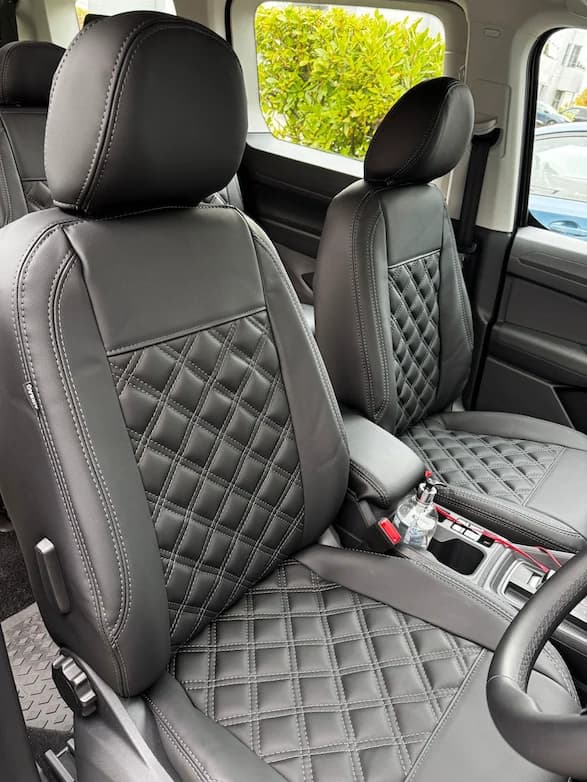
Autumn and Winter Seat Cover Care in Ireland: Rain, Mud and Damp
Irish summers are short, and the wet season is long. From late August onwards, the car stops being a place for sandy shoes and ice cream and becomes a drying room for wet coats, muddy boots, dog paws and school bags. That's a completely different kind of wear from the one we covered in our summer seat cover care guide — and it's the part of the year that does the most damage to an unprotected interior.
The good news is that autumn and winter are exactly the conditions custom-fit covers are built for. Here's how to get through the wet months with covers that still look new in the spring.
Why Autumn and Winter Are Harder on Seats
Summer problems sit on the surface: sun cream, sand, sugar. Winter problems soak in.
- Water and damp. Rain comes in on coats, umbrellas and trouser legs. Factory cloth absorbs it and holds it, which is how cabins end up smelling musty by November.
- Mud and grit. Wet mud carries fine grit that acts like sandpaper on seat edges and bolsters every time someone slides in and out.
- Road salt. Winter salt on boots and shoe soles transfers to seat cushions and leaves pale marks if it's left to dry in.
- Less drying time. Short days and low temperatures mean a damp interior often doesn't fully dry between journeys, which is what actually causes mould and odour — not the water itself.
A cover you can wipe down in thirty seconds solves nearly all of this. Cloth upholstery gives you no such option.
Waterproof or Eco-Leather? What Works Best in Wet Months
Both of our main material choices handle the Irish winter far better than factory cloth, but they suit different drivers.
- Waterproof covers are the practical pick for farm vehicles, construction work, dog owners and active families. Rain, mud and spills stay on the surface instead of soaking into the original upholstery, which is what prevents mould and lingering odours.
- Eco-leather is the everyday all-rounder: durable, easy to wipe clean, and it looks premium while still shrugging off a wet coat on the passenger seat.
- Alcantara is softer and grippier and works beautifully on centre panels, but it needs a gentler cleaning routine than eco-leather. If your car does heavy winter duty, keep Alcantara to areas that see less traffic. The eco-leather vs Alcantara guide breaks down where each one earns its place.
If you're still deciding, the colours page shows the full range, and the 3D configurator lets you combine materials in the same set — a hard-wearing surface where the mess lands, and something more luxurious where it doesn't.
A Simple Wet-Season Routine
You don't need a detailing kit. Three habits cover almost everything:
- Wipe down weekly. A damp microfiber cloth over the seat cushions and the front edge of the base removes most of a week's mud and salt in a couple of minutes. Our full method is in the guide to cleaning leather seat covers.
- Deal with salt marks early. Dried salt leaves a white bloom that gets harder to shift the longer it sits. Damp cloth, then dry — no harsh household chemicals.
- Vacuum the grit. Grit ground into seams does more long-term damage than any spill. A soft brush attachment along stitching lines and quilting grooves once a fortnight is enough.
Getting the Damp Out
Odour in winter is a ventilation problem more than a cleaning problem.
- Crack the windows for a few minutes when you park somewhere sheltered, or run the fan on fresh air rather than recirculation on the way home.
- Don't leave wet coats, gym kit or dog towels on the seats overnight — that's where musty smells come from.
- If floor mats are soaked, lift them out to dry. Water trapped underneath keeps the whole cabin humid.
Muddy Dogs, Wet Boots and Work Gear
If you carry a dog or work gear, winter is the season that decides how your interior looks in three years' time.
- A towel or blanket over the seat for the drive home is still worth it, even with waterproof covers — it catches the bulk before you have to clean anything.
- Wipe paw prints while they're wet. Dried mud brushes off eventually, but wet mud never gets the chance to bond in the first place.
- For vans and work vehicles, dark colours with a lighter accent hide daily wear far better than a light main colour. Our gallery shows how that looks in real installations.
Check the Fit After a Hard Winter
Covers that live through a wet season with kids, dogs or tools in the back can loosen slightly, and a loose cover lets water and grit past it to the seat underneath.
Once the worst of the weather passes, take ten minutes to re-tension the set: check the Velcro fastening beneath the seat cushion, make sure the elastic hooks under the seat are still evenly attached to the frame, and smooth out any wrinkles that have formed. The full sequence is on our installation page. If anything doesn't sit right, professional fitting is available at our Dublin 15 workshop.
Thinking About Covers for This Winter? Order Early
One thing worth knowing: every set is made to order for one specific vehicle, and the standard waiting period is 6–8 weeks. If you want covers in place before the worst of the winter weather, ordering in late summer or early autumn is the timing that actually works — ordering in December means fitting them in February.
Start by checking your vehicle on the car list, then design your set in the 3D configurator with a live price as you go. The how to order guide walks through the full process from design to delivery, and delivery across Ireland is free and tracked with DPD or An Post Express.
FAQ
Are waterproof seat covers worth it for Irish weather?
Yes. Given how unpredictable the weather is here, waterproof covers stop rain, mud and spills from reaching the original upholstery, which is what prevents mould and bad odours developing over a wet winter.
Can I use a heater or hairdryer to dry damp seat covers?
Don't apply direct heat to any automotive material. Blot the moisture with a dry cloth, open the windows or run the fan on fresh air, and let the cabin dry naturally.
How do I get salt marks off my seat covers?
Wipe them with a damp microfiber cloth before the salt dries into the surface, then dry with a clean cloth. Avoid harsh household cleaners, which can strip the finish on eco-leather.
Do seat covers make the cabin colder in winter?
No. The covers sit over your existing seats and don't change how the seat heats or how the cabin warms up — you're adding a wipe-clean surface, not removing padding.
Summary
Autumn and winter in Ireland mean water, mud, grit and salt in the cabin for months at a stretch — and damp that never quite gets a chance to dry. A weekly wipe-down, a fortnightly vacuum along the seams and a bit of ventilation is genuinely all it takes to get a custom set through the season looking new. The one thing you can't rush is the 6–8 week build time, so if you want protection in place before the weather turns, now is the time to design it. Open the 3D Configurator and build your set.