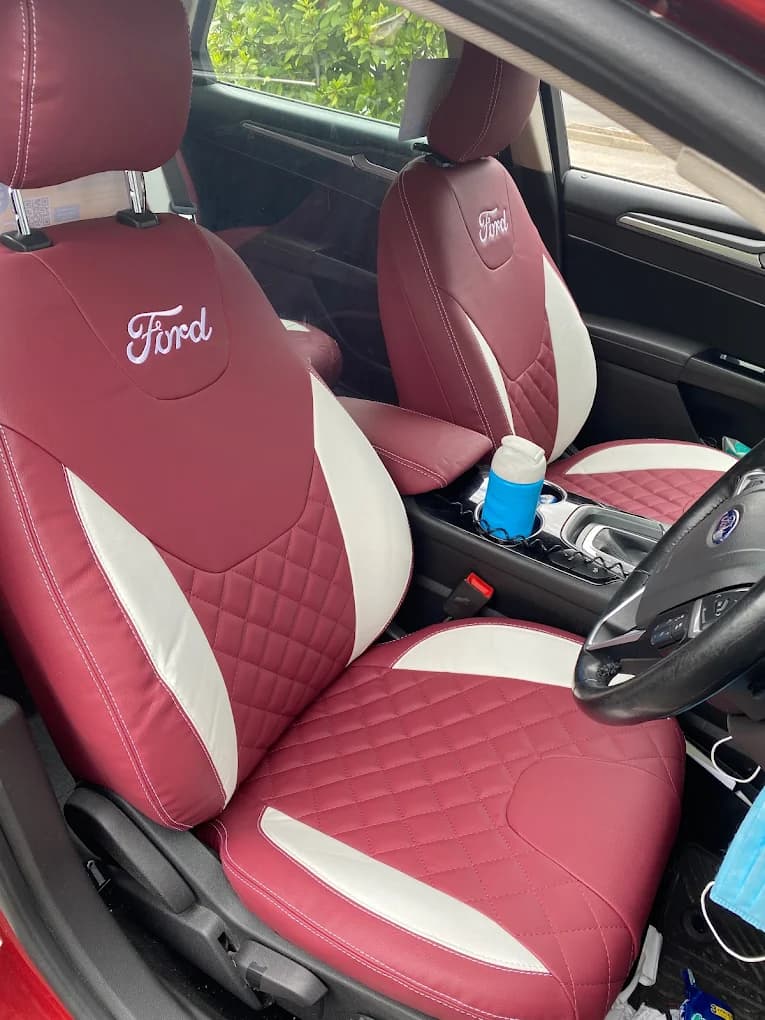
Seat Covers vs Reupholstery: Which Does Your Car Actually Need?
Every driver with a tired interior eventually asks the same question: do I re-cover the seats, or do I have them properly retrimmed? Both routes end with a car that looks good again, but they solve very different problems — and one of them costs a great deal more than the other. Here is an honest comparison, written from a Dublin 15 workshop that makes custom-fit covers every week.
The Short Answer
If the foam and frames are still sound and the damage is on the surface — worn cloth, cracked vinyl, stains, sun fade, a split seam on the driver's bolster — custom seat covers are almost always the right call. They go over the original seat, restore the look completely, and protect what's underneath.
If the seat itself has collapsed — foam broken down so you sit unevenly, a bent frame, a failed heating element, or padding that's gone hard and flat — no cover will fix that. That's a reupholstery and refoaming job, and it belongs with a trimmer who takes the seat apart.
Most Irish cars we see fall into the first category. Seats in a five to twelve year old family car usually have plenty of structure left; it's the fabric that has given up.
What Custom Seat Covers Actually Do
A custom set is cut from a pattern built for one specific make, model and year — not stretched over the seat and hoped for the best. Each panel follows the original shape, so the seat keeps its lines instead of looking wrapped.
What that gets you:
- A new-looking interior in an afternoon. Fitting is a job you can do at home following our installation instructions, or you can book the workshop and have it done for you.
- The original upholstery preserved. The factory seats stay under the covers, protected from spills, dog claws, jeans rivets and the daily grind. That matters at trade-in time — see Do Seat Covers Help Protect Car Resale Value?.
- A design you choose. Colour combinations, stitching pattern, piping, perforation — all picked in the 3D configurator before anything is cut. Browse the colour options and the gallery to see how combinations look on real cars.
- Reversibility. Covers come off. If you're selling, or you want a different look in three years, the factory seats are still there.
Where covers don't help: sagging foam, broken recliner mechanisms, torn side airbag seams, or a seat base that has cracked. Covering those hides the symptom and leaves the fault.
What Reupholstery Does
Full reupholstery means stripping the seat to the frame, replacing or rebuilding the foam, and stitching new material directly onto the seat. It's the proper fix for structural problems and the only route if you want the car to look factory-original with no cover edges anywhere.
The trade-offs are real:
- The car is off the road while the seats are out and on a bench.
- It's the more expensive option in almost every case, because it's labour-intensive skilled work per seat.
- It's permanent. The original trim is gone. There's no going back to standard, and no protective layer to remove before selling.
- It's the right answer for classic cars, show builds, and seats that have genuinely failed.
How to Tell Which One You Need
Sit in the driver's seat and check four things:
- Sit height and level. Do you sink to one side, or feel the frame through the padding? That's foam or frame — reupholstery.
- The bolster. Worn fabric and a thin patch on the outer edge is normal wear, and covers handle it. A collapsed bolster you can push flat with a thumb is structural.
- The surface. Fade, stains, small tears, cracked leatherette, cigarette burns — all cosmetic. Covers.
- Electronics. Heated seats that no longer heat, or a passenger occupancy sensor throwing a warning light, need the seat opened up. A cover won't reach the fault.
If everything on that list is cosmetic — and for most daily-driven Irish cars it is — you're a seat cover customer, and you'll spend a fraction of what a retrim costs.
The Ireland-Specific Bit
Irish driving is hard on interiors in a very particular way. Damp coats, wet boots, salted winter roads, dogs after a beach walk, and a climate that never really dries the cabin out. That's what turns cloth grey and grows the smell you can't get rid of.
Eco-leather and Alcantara both handle that better than factory cloth because they wipe rather than absorb — worth reading our eco-leather vs Alcantara comparison before you choose. And if you're weighing a set of cheap universal covers instead, custom vs universal covers the differences that matter.
What It Costs and How Long It Takes
We don't publish a single price for custom covers, because there isn't one. The figure depends on your vehicle — a five-seat hatchback and a seven-seat van are not the same amount of material or work — plus the material you choose, the stitching pattern and any extras. The 3D configurator gives you a live price for your exact specification as you build it; that's the number to work from.
On timing: every set is made to order, and the standard waiting period is 6–8 weeks from the date of payment. Delivery within Ireland is free, sent tracked by courier. If you'd rather have the covers fitted by us at the workshop in Ballycoolin, that's booked with a €200 non-refundable deposit — the details are on the payment options page.
Quick FAQ
Can covers hide a tear in the seat? Yes, if the tear is in the fabric and the foam underneath is intact. If foam is coming out of the tear, get the seat repaired first, then cover it.
Will covers interfere with side airbags? Our patterns are made with the airbag zones in mind, and the installation guide shows exactly how the seams work. Follow the instructions and don't modify them.
Is my car supported? Check your make, model and year on the car list. If it isn't there yet, get in touch — patterns are added regularly.
Can I do both? Absolutely, and it's a smart order of operations: have failed foam rebuilt, then fit custom covers over the repaired seats so it never gets that bad again.
Ready to see what your interior could look like? Start with the how to order page and build your set in the configurator.